
If you’re shopping for a golf cart or thinking about driving one on the road in Ohio, it’s important to understand the difference between golf carts, golf cars, and LSVs. While many people use these terms interchangeably, the legal and technical definitions matter—especially when it comes to where and how you can use your vehicle.
At Glenn’s Golf Car Central, we help customers across Painesville Township, Northeast Ohio, and the greater Cleveland area navigate these terms with confidence.

Golf Cart vs Car
Let’s start with the terminology. According to ANSI (American National Standards Institute), the term “golf cart” actually refers to a non-self-propelled vehicle—basically a push cart used on golf courses. The correct term for what most people call a golf cart is actually “golf car.” A golf car is a self-propelled vehicle designed for use on golf courses, usually with a top speed under 20 miles per hour. This distinction is technical but important. When it comes to the law, Ohio makes additional distinctions between golf cars and Low Speed Vehicles (LSVs), which have broader usage and legal requirements.
Golf cars or golf carts typically have a maximum speed of 20 mph and are not considered street-legal under federal law. While some Ohio communities may allow limited on-road use of golf cars under local ordinances, they do not qualify as LSVs unless they meet very specific safety and performance criteria. This is where the real legal separation begins.
Defining LSV
A Low Speed Vehicle (LSV) is a federally recognized class of electric vehicle. To be legally classified as an LSV, the vehicle must reach a speed of 20 to 25 miles per hour and meet specific safety requirements as outlined by the National Highway Traffic Safety Administration (NHTSA). These include:
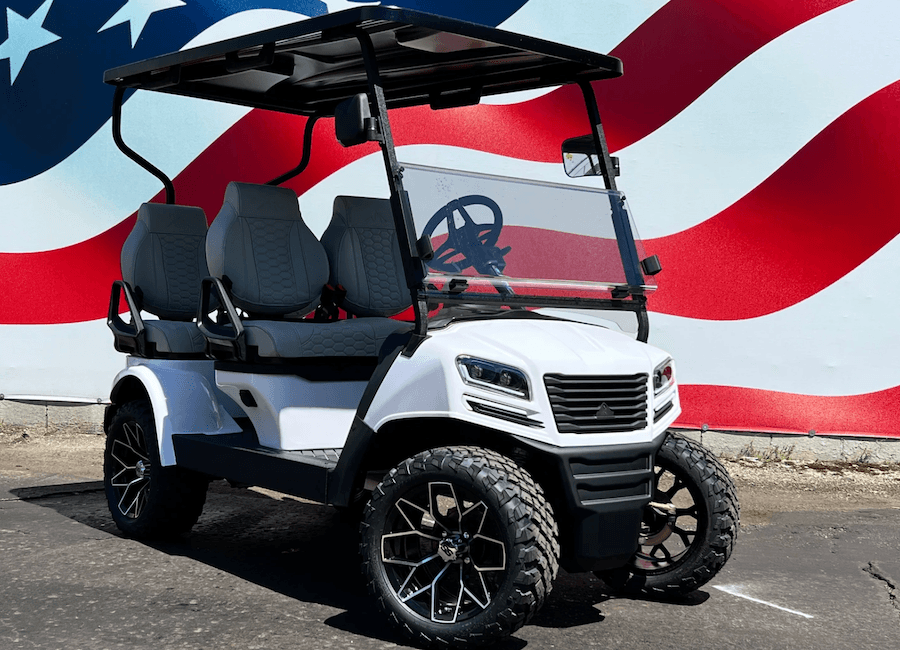
- Headlights
- Brake lights
- Turn signals
- Tail lights
- Reflectors
- Windshield
- Mirrors
- Parking brake
- Seat belts
- Vehicle Identification Number (VIN)
Without all of these features, your vehicle cannot be registered or insured as an LSV in the state of Ohio.
In Ohio, LSVs are street-legal and may be driven on public roads with speed limits of 35 mph or less. Ohio law requires that all LSVs be titled and registered. They must also be insured, and the driver must be at least 16 years old with a valid driver’s license. These laws apply across Ohio, including Painesville Township, Chardon, Mentor, Madison, and other communities throughout Lake County and Northeast Ohio. If you’re considering a golf cart for more than just private property use, understanding these laws is critical.
Converting a Golf Car into a LSV
Many Ohio residents ask whether they can convert a golf cart into an LSV. The answer is yes, but it’s not always simple or cost-effective. Converting a golf cart into an LSV requires upgrading it to meet every one of the NHTSA safety standards mentioned earlier. That includes electrical upgrades, lighting systems, mirrors, seat belts, and often suspension and speed modifications to consistently meet the 20–25 mph speed range. At Glenn’s Golf Car Central, we can evaluate your current golf cart and help you decide whether an LSV conversion makes sense or if a purpose-built LSV is a better investment.
So which is right for you: a golf cart or an LSV?
If you plan to use your vehicle only on private property, golf courses, campgrounds, or inside gated communities, a golf car (or standard golf cart) may be all you need. These vehicles offer convenience and comfort without requiring licensing, registration, or insurance.
On the other hand, if you want to drive on public roads in Ohio—or you need the safety features that come with road use—an LSV is the correct choice. It offers more power, more protection, and more legal access to Ohio roads.
We’re Here to Help
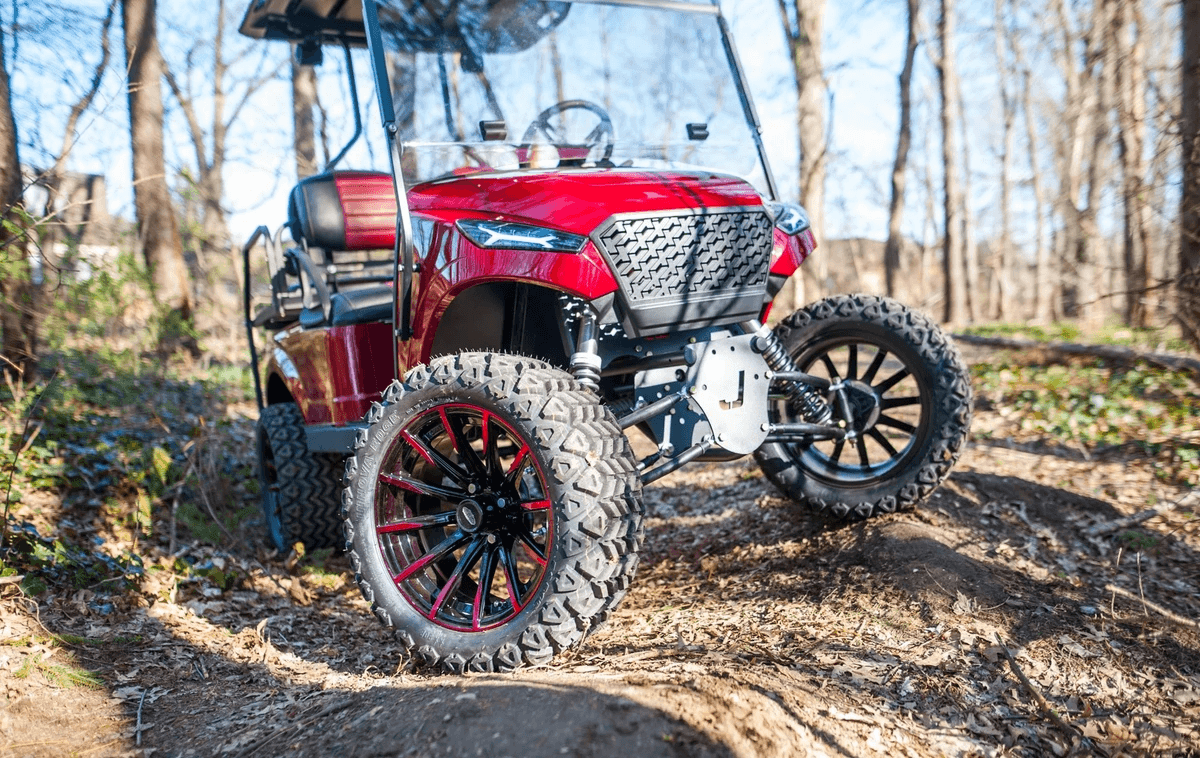
At Glenn’s Golf Car Central, we specialize in both. Our team carries a wide range of street-legal LSVs from brands like Epic, Sierra, and MadJax. We also offer a full inventory of new and used golf carts from Club Car, E-Z-Go , and MadJax, as well as full-service repairs, seasonal maintenance, and custom builds. We help customers throughout Northeast Ohio understand what they need and make the right choice based on how they plan to use their cart. Whether you’re interested in a lifted cart for private use or a fully compliant street-legal LSV, we’re here to help.
Here are a few common questions we hear from customers:
What is the difference between a golf cart and an LSV in Ohio?
Golf carts are typically limited to 20 mph and are not considered street-legal. LSVs operate at 20–25 mph and must meet federal safety standards to be driven legally on public roads.
Are golf carts street legal in Ohio?
Only if they meet LSV requirements. Otherwise, they can only be used on private property or in limited-use areas approved by local municipalities.
Can I drive an LSV on the road in Ohio?
Yes. LSVs are allowed on roads with speed limits of 35 mph or less, provided they are titled, registered, insured, and operated by a licensed driver.
Does Glenn’s offer LSVs and golf carts for sale?
Yes. We offer a wide range of street-legal LSVs and traditional golf carts. We also build custom carts, provide service and repair, and offer seasonal storage solutions.
If you have questions about which type of vehicle is right for you, or if you want to see our current inventory, contact Glenn’s Golf Car Central today. We are Northeast Ohio’s trusted golf cart and LSV dealer, serving Painesville Township, the Cleveland area, and beyond.
- Phone: (440) 834-5800
- Email: glenngolfcar@gmail.com
- Website: www.glennsgolfcar.com
Let our experienced team help you choose the right vehicle for your lifestyle, your community, and the Ohio roads you travel.